If you are currently keeping your curated wine collection nestled between the milk carton and last night’s leftovers, your investment is in quiet, constant danger. It is a common misconception that a standard kitchen refrigerator is a safe haven for wine. In reality, a regular household fridge is engineered for a completely different purpose: to keep perishable food bone-dry and aggressively cold. To fine wine, that environment is a hostile cocktail of three silent killers: microscopic compressor vibrations that stir up sediment, bone-dry air that shrinks corks, and harsh, unshielded lighting.
Protecting your wine collection requires an environment built for preservation, not just refrigeration. Here is the exact science behind why standard fridges fail, and how premium wine coolers employ advanced technology to keep your bottles pristine.
In this guide, you’ll learn:
- The key difference between a wine fridge and refrigerator
- Why standard fridges can be damaging for wine stored long term
- How temperature, humidity, vibration, and light affect bottles
- Which wine-fridge features are worth prioritizing for your collection
- Why a dedicated cooler can make entertaining easier
The Kitchen Fridge vs. the Wine Cooler: A Core Overview
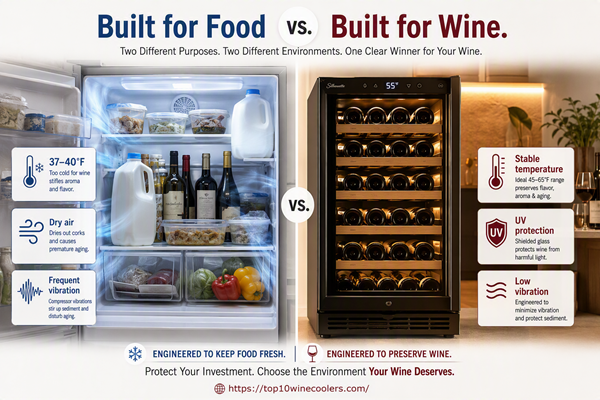
The most important difference between a wine fridge and refrigerator is simple: a kitchen refrigerator is designed to slow food spoilage, while a wine fridge is designed to preserve wine’s flavor, structure, and aging potential.
A standard refrigerator typically operates around 37°F to 40°F. That is excellent for milk, produce, leftovers, and meat—but it is generally too cold for long-term wine storage. It also cycles frequently to maintain food-safe temperatures, moving dry, refrigerated air throughout the compartment. That environment helps prevent food from spoiling, but it is not ideal for natural corks or wines intended to mature gracefully.
A dedicated wine cooler, by comparison, is built around the needs of bottled wine. Most models allow you to set a stable temperature about 45°F to 65°F, depending on the wine and whether you are storing or serving it. They also tend to include features such as vibration-reducing compressors, UV-protected glass, pull-out shelving, and softer interior lighting.
That does not mean you can never put wine in a regular refrigerator. A standard fridge is perfectly useful for chilling a bottle of Sauvignon Blanc, rosé, Champagne, or Pinot Grigio before dinner. The issue is long-term storage. If you are asking, can you store wine in a regular fridge long term? The practical answer is: No—not if you want to give cork-finished bottles and age-worthy wines their best chance.
For a few days or even a couple of weeks, your kitchen fridge is a convenient short-term chilling tool. For months or years, a wine fridge is the more appropriate protective environment.
The Three Enemies of Wine Aging (And How Regular Fridges Fail)
Wine is remarkably resilient in some ways, but it is also sensitive to its surroundings. A bottle meant for cellaring is not just a beverage waiting to be opened; it is a living product that continues to evolve. The goal of storage is not to make wine colder; it is to keep its environment stable.
Temperature: Why 40°F Is Too Cold for Varietals
The ideal long-term storage temperature for most wines is often cited around 55°F, with consistency being just as important as the number itself. A wine fridge lets you maintain a stable, moderate setting that protects the wine whether you are storing Cabernet Sauvignon, Chardonnay, Pinot Noir, or sparkling wine.
By contrast, the 37°F to 40°F temperature in a household refrigerator is intended for food safety. Keeping wine at that temperature for an extended period can slow its development and, more importantly, expose it to repeated temperature fluctuations every time the door opens, warm leftovers are added, or the refrigerator enters a cooling cycle.
Cold storage can also dry out natural corks over time. As cork loses moisture and elasticity, it may no longer maintain as reliable a seal. That can allow more oxygen into the bottle than intended, potentially accelerating oxidation and dulling the wine’s fruit, aroma, and complexity.
Wine does not need to be frozen or near-frozen to be protected. It needs consistency. A dedicated wine fridge keeps bottles at a storage-friendly temperature without the aggressive cold of the kitchen refrigerator.
Humidity: How Dry Air Shrinks and Destroys Corks
Your kitchen refrigerator is designed to remove moisture from the air. That dry environment helps keep food fresher and discourages mold and bacterial growth. For wine with natural cork closures, however, excessively dry conditions can become a concern over long storage periods.
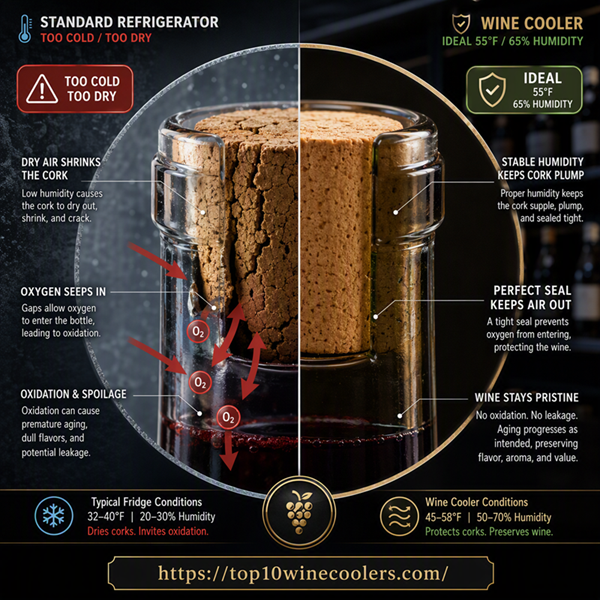
Natural cork needs enough ambient moisture to remain resilient. In a very dry refrigerator, a cork may gradually dry and contract. Once that happens, oxygen can enter the bottle more easily, increasing the risk of premature aging, oxidation, or leakage.
This is especially relevant for collectors who buy wines to enjoy over several years: vintage reds, premium Bordeaux-style blends, Barolo, Brunello, collectible Napa Cabernet, and certain age-worthy whites. The longer you intend to keep those bottles, the more important their storage environment becomes.
Many wine refrigerators are designed to maintain a less dry environment than a typical food refrigerator. While humidity control varies by model, the enclosed, purpose-built cabinet and stable conditions are inherently more wine-friendly than a constantly cycling kitchen fridge.
It is worth noting that screwcaps and synthetic-cork wines are less sensitive to cork drying. Still, they benefit from stable temperatures, low vibration, and protection from light—so a wine fridge remains helpful for more than just corked bottles.
Vibration: How Compressor Cycles Agitate Fine Wine Sediment
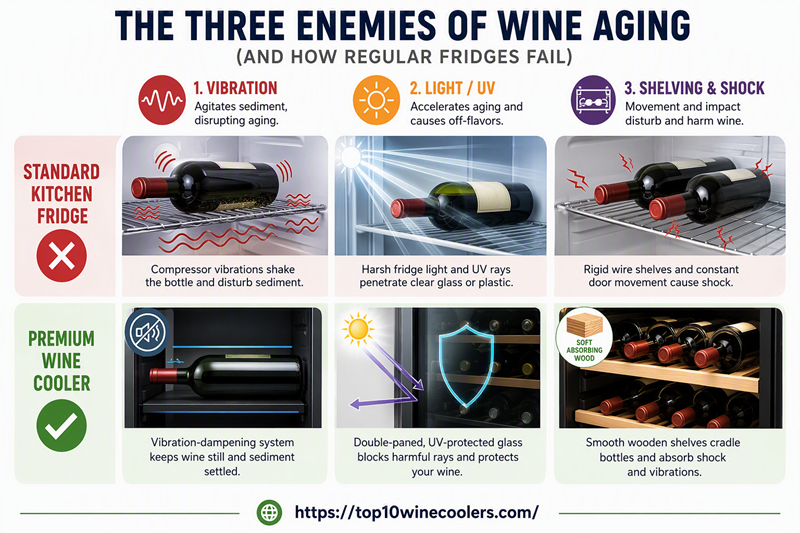
Vibration is one of the most overlooked reasons why standard fridges ruin wine over time. Your refrigerator’s compressor cycles on and off all day, often alongside fans, ice makers, water dispensers, and the regular movement of a busy kitchen. Every cycle creates subtle vibration.
For an everyday bottle you plan to drink this weekend, that is unlikely to be a major concern. But for fine wine meant to rest and develop, constant movement is not ideal. Older red wines and unfiltered wines can develop delicate sediment as they age. Excessive agitation may keep that sediment suspended, making the wine cloudy or gritty when poured before it has had time to settle.
Vibration is also undesirable because wine is best stored quietly and consistently. The more stable the bottle, the more predictable its aging environment becomes.
A vibration dampening wine cooler is designed to minimize this problem. Premium models may use low-vibration compressor systems, insulated cabinet construction, rubberized mounts, or thermoelectric cooling technology in smaller units. While no appliance is completely vibration-free, purpose-built wine coolers reduce the constant mechanical disturbance common in a household refrigerator.
For collectors, that protection can matter most with older vintages, sediment-heavy reds, and bottles you are saving for meaningful occasions.
The Invisible Threat: Light Damage and UV Exposure
Light is another quiet threat to wine quality, particularly sunlight and ultraviolet exposure. Wines stored in clear or lightly colored bottles, including many white wines, rosés, and sparkling wines—are more vulnerable to light strike, a condition that can create muted aromas and unpleasant sulfur-like notes.
A standard refrigerator may seem dark most of the time, but its interior light turns on whenever the door opens. In a busy home, that can happen dozens of times per day. Bottles placed in a refrigerator door are exposed not only to light but also to the most dramatic temperature swings and vibration.
The greater concern, however, is where the refrigerator or wine cooler is located. A glass-front wine fridge positioned near a sunny kitchen window, patio door, or brightly lit entertaining space should have protective glass.
An UV protected glass wine fridge helps filter damaging ultraviolet rays while still allowing you to display your collection. Double-paned, tinted, or UV-resistant glass can also improve insulation, reducing the amount of temperature change caused by warm ambient air and sunlight.
For best results, place any wine appliance away from direct sun, ovens, dishwashers, and heating vents. UV-protected glass is a valuable layer of defense—not a reason to place a wine fridge in direct afternoon sunlight.
The Engineering Behind Premium Wine Preservation
A quality wine cooler is more than a compact refrigerator with a wine rack. Its features are designed around the conditions wine needs to remain stable, protected, and ready to enjoy.
Advanced Vibration-Dampening Systems Explained
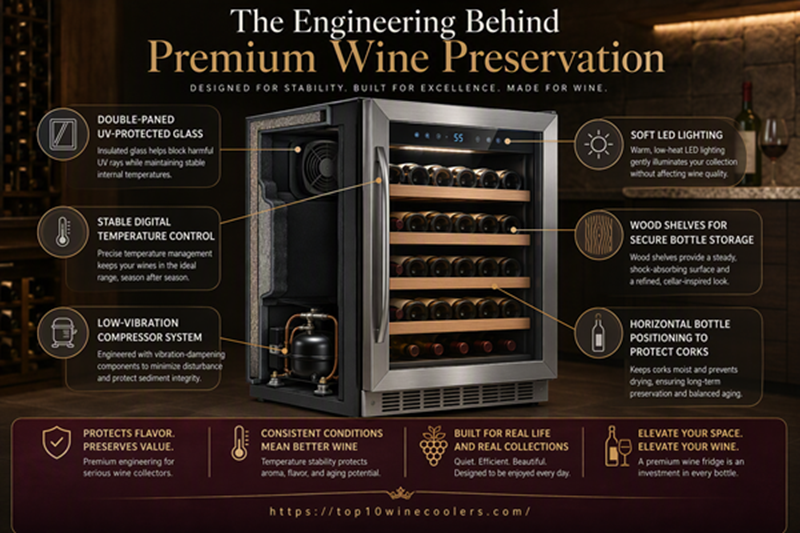
The best wine refrigerators use engineering features that reduce mechanical disturbance. Depending on the model, that may include a low-vibration compressor, shock-absorbing mounts, insulated cabinet walls, or quiet fan circulation.
Thermoelectric wine coolers are often praised for their low-vibration operation because they do not use a traditional compressor. They can be an appealing option for small collections kept in a climate-controlled room. However, compressor-based units usually offer stronger cooling performance, particularly in warmer homes, garages, or busy kitchens.
For many buyers, the ideal balance is a modern compressor wine fridge designed with vibration reduction in mind. Brands such as EdgeStar and Allavino offer models with features aimed at stable, collector-friendly storage, though the right choice depends on your bottle count, room temperature, and desired installation style.
The Defense Power of Double-Paned UV-Protected Glass
Glass doors make it easier to see what you own, plan dinner parties, and avoid leaving the door open while searching for a bottle. But glass should also protect, not merely display your collection.
Double-paned UV-protected glass helps reduce exposure to ambient light while adding insulation. That insulation supports more stable internal temperatures, especially if your wine fridge is installed in a kitchen or entertaining area where the surrounding temperature changes throughout the day.
Look for terms such as “UV-resistant glass,” “tinted glass,” “double-pane glass,” or “Low-E glass” when comparing models. These features are particularly worthwhile if you want a display-style wine fridge rather than a fully solid-door cellar unit.
Why Wood Shelves Beat Metal Wire for Shock Absorption
Shelves may seem like a cosmetic detail, but they affect both bottle security and everyday usability. Metal wire shelves are common in budget refrigerators, yet they can feel less stable when pulled out and may not accommodate wider Champagne, Pinot Noir, or Burgundy bottles particularly well.
Wood-front or wooden wine shelves generally create a more refined, cellar-inspired storage experience. They can provide a steadier resting surface, help reduce bottle-on-metal rattling, and make it easier to access bottles without disturbing the rest of the collection.
They also elevate the look of the appliance. If your wine fridge will live in your kitchen, dining room, bar area, or living space, wood shelving helps it feel like part of your entertaining setup rather than another utilitarian appliance.
Why a Dedicated Wine Cooler Elevates Your Hosting Experience
A dedicated wine cooler protects your bottles, but it also makes hosting more relaxed. Instead of crowding your kitchen fridge with bottles before guests arrive, you can keep a ready-to-pour selection organized at proper serving temperatures.
A single-zone unit is often ideal if you primarily collect one style of wine or want one consistent storage temperature. A dual-zone model can be useful if you want crisp whites and sparkling wines chilled in one section while reds are kept slightly warmer in another. For a closer comparison, see our guide to Single-Zone vs. Dual-Zone Wine Coolers.
Capacity is equally important. A wine fridge that is too small fills quickly, especially once you account for wider bottles and the temptation to bring home a few extra favorites. For many households, a 40- to 50-bottle wine refrigerator offers a practical sweet spot: enough room to build a varied collection without overwhelming a kitchen or entertaining area. Use our Bottle Capacity Guide to calculate the size that makes sense for your buying habits.
Ultimately, a wine fridge is not an unnecessary luxury for someone who cares about wine. It is a practical preservation tool—and a way to protect the money, memories, and future dinners stored in every bottle.
Leave a Reply